Agriculture & Biotechnology
Pakistan Atomic Energy Commission has taken the lead in utilizing nuclear technology to improve productivity of Agriculture sector through the introduction of new crop varieties, pest control technologies, plant nutrition and water management, animal health and productivity and food decontamination and preservation. Agriculture centers of PAEC also organize ‘Farmer’s Days”, field visits and awareness programs to educate the farmers about newly released varieties, advanced methods of cultivation and water saving techniques.
Development of New Varieties
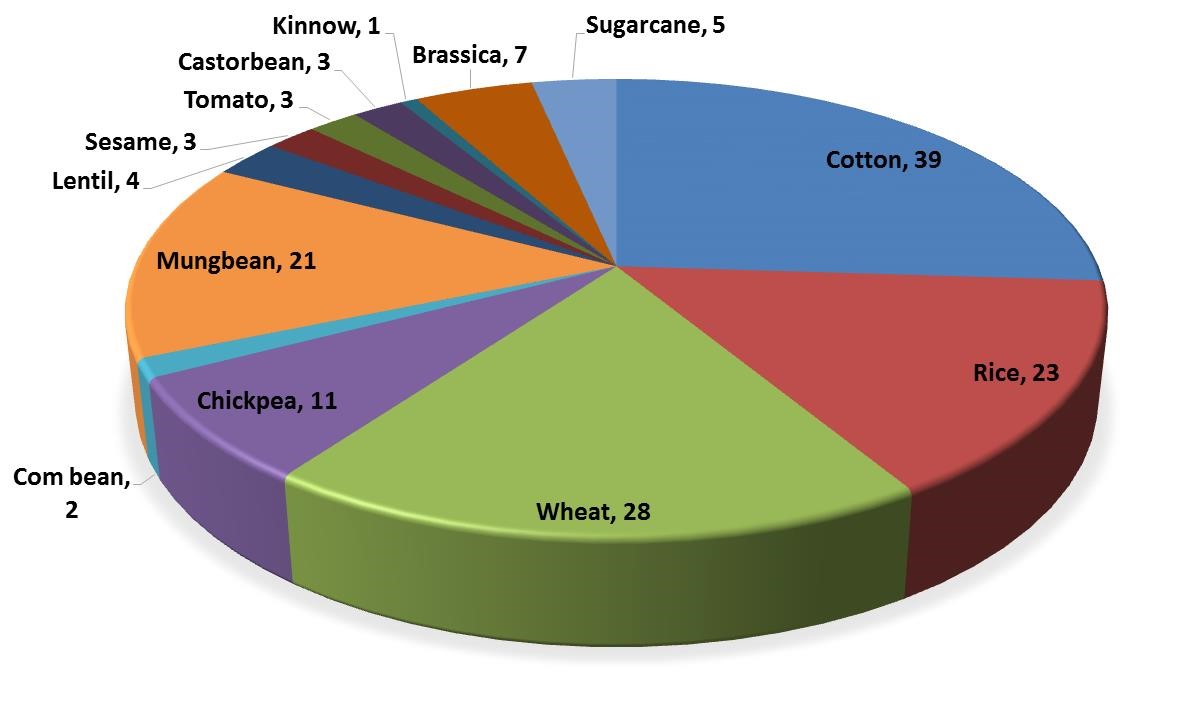
Using a combination of conventional breeding methods with mutation breeding, marker assisted selection and genetic engineering techniques varieties of both major and minor crops are being developed for higher yields, better quality, stress tolerance and wider adaptability. So far, more than 150 crop varieties have been developed by PAEC Agri & Biotech Institutes which are popular among the farming community of Pakistan.
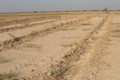
Utilization of Marginal Lands
Agriculture and biotechnology institutes of PAEC have developed technologies for the utilization of salt affected lands and providing this technology as well as plant material not only to the local farmers but also at international levels. Main focus is on the utilization of saline areas with some economic gains also improving the land with time.
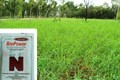
Plant Nutrition and Water Management
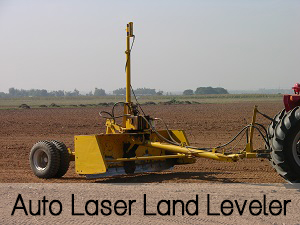
Scarcity of water is threatening the present as well as future productivity and food security. Excessive use of fertilizers is affecting the soil fertility and increasing environmental hazards. Technologies have been developed to improve irrigation techniques that reduce water losses. Alternate cheap sources of nutrients have been identified to efficiently manage plant nutrition and reduced application of chemical fertilizers.
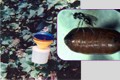
Reduction of Losses to Pests and Pathogens
One way to increase total agriculture productivity is by reducing field and post harvest losses to pest and pathogens. PAEC Institutes have introduced mass rearing of beneficial predatory insects to control the insect pests of various crops. Technologies have been developed and transferred to end users to decrease losses through integrated management of insect pests. R&D in food irradiation technology has provided with methods to Increase shelf life, remove contaminants and minimize storage losses
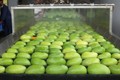
Improved Export Potential
Exports play a vital role in the economy of a country and as our exports are mainly (70%) based on agriculture therefore any efforts in this sector contribute directly toward the development of Pakistan. Services are being provided for removal of contaminants from export commodities through irradiation, identification of aflatoxins and drug residues in food and dairy products and DNA based testing of basmati rice and genetically modified organisms.
Human Resource Development
Agriculture and Biotechnology Institutes also have a fair share in human resource development through training courses, workshops and internships. On average 40 different courses are arranged every year for hands-on training of latest techniques and technologies in various fields of agriculture research. Based on this persistent efforts and success of PAEC for strengthening of skilled core research teams, IAEA declared NIAB as ‘IAEA Collaborating Centre’ for Nuclear Techniques in Food & Agriculture. These practical trainings equally benefit researchers, students and academia from various national and international research organizations and universities. NIAB and NIBGE are also affiliated with PIEAS for award of MPhil and PhD degrees in Biology and Biotechnology.
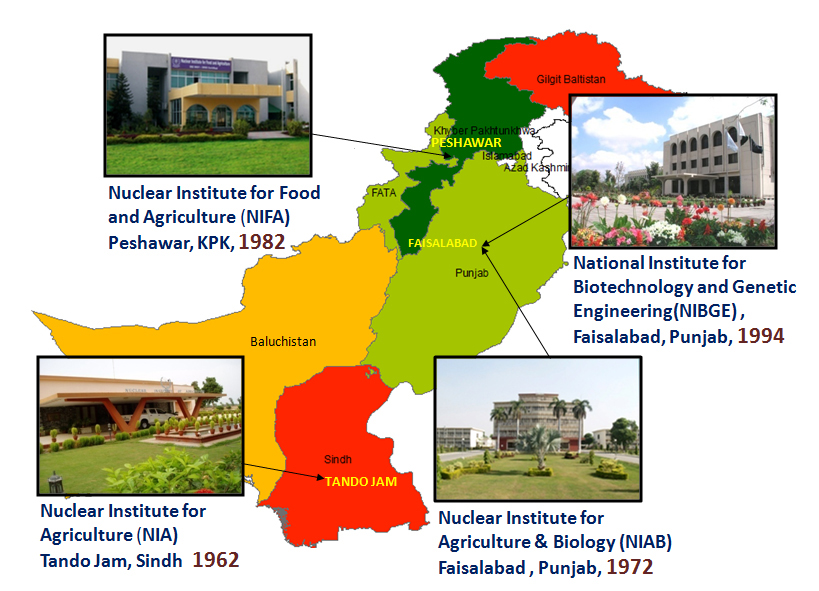
Agri and Biotechnology Centres
Crop Varieties
Total Number of Crop Varieties Developed by PAEC Agri & Biotech Institutes
| CROP | NIA | NIAB | NIFA | NIBGE | TOTAL |
|---|---|---|---|---|---|
| Cotton | 5 | 20 | 0 | 14 | 39 |
| Wheat | 15 | 0 | 12 | 1 | 28 |
| Rice | 7 | 10 | 0 | 6 | 23 |
| Mungbean | 1 | 15 | 5 | 0 | 21 |
| Chickpea | 0 | 7 | 4 | 0 | 11 |
| Commonbean | 0 | 0 | 2 | 0 | 2 |
| Lentil | 1 | 3 | 0 | 0 | 4 |
| Sesame | 0 | 3 | 0 | 0 | 3 |
| Castor | 0 | 3 | 0 | 0 | 3 |
| Brassica | 1 | 0 | 6 | 0 | 7 |
| Tomato | 0 | 3 | 0 | 0 | 3 |
| Kinnow | 0 | 1 | 0 | 0 | 1 |
| S. cane | 5 | 0 | 0 | 0 | 5 |
| Total | 35 | 65 | 29 | 21 | 150 |